Local, instructor-led live Enterprise Architecture (EA) training courses demonstrate through interactive discussion and hands-on practice comprehensive perspective of tools used to describe and implement the Enterprise Architecture.
Enterprise Architecture training is available as "onsite live training" or "remote live training". Onsite live Enterprise Architecture training can be carried out locally on customer premises in Latvia or in NobleProg corporate training centers in Latvia. Remote live training is carried out by way of an interactive, remote desktop.
NobleProg -- Your Local Training Provider
Testimonials
I generally enjoyed the hands-on.
ESA
Course: System Engineering using SysML and UML 2
I was benefit from the hands-on, tool availability and guided exercises.
ESA
Course: System Engineering using SysML and UML 2
I mostly enjoyed the exercise.
ESA
Course: System Engineering using SysML and UML 2
Content applies to what I want to do.
General Dynamics Land Systems
Course: Systems Modelling with SysML
I genuinely enjoyed the hands-on examples.
General Dynamics Land Systems
Course: Systems Modelling with SysML
I genuinely liked the hands-on experience.
Andrew Neves - General Dynamics Land Systems
Course: Systems Modelling with SysML
General knowledge of SysML and demonstration of alternate tools / comparisons. Magic Draw seems much more professional, and I wasn't aware of it.
Richard Young - General Dynamics Land Systems
Course: Systems Modelling with SysML
Relevant example subjects . The trainer is very knowledgeable in getting around limitations in EA.
Elmer Ubalde - General Dynamics Land Systems
Course: Systems Modelling with SysML
I mostly was benefit from the funny instructor.
General Dynamics Land Systems
Course: Systems Modelling with SysML
I felt Filip was extremely knowledgeable and taught the course as well as he could. He was able to maintain a good spirit even when his many of his students were not the most engaged.
Josh Underwood - General Dynamics Land Systems
Course: Systems Modelling with SysML
Was great training, excellent trainer. He did very well dealing with the EA software and working with all of it's bugs.
Mark van der Zanden - General Dynamics Land Systems
Course: Systems Modelling with SysML
I generally enjoyed the activity and State diagrams.
General Dynamics Land Systems
Course: Systems Modelling with SysML
Filip was enthusiastic, and provided good explanations of the subject matter. He answered questions promptly and thoroughly.
General Dynamics Land Systems
Course: Systems Modelling with SysML
I was benefit from the practical exercises, and easy to discuss with the instructor.
Kongsberg Maritime AS
Course: Object-Oriented Analysis and Design using UML
I liked the sample on how to deploy and create application.
CARD MRI Information Technology Inc.
Course: System Architecture, Service Architecture, and Microservice Architecture with Spring Cloud
I genuinely enjoyed the worked examples.
LMCO
Course: Applying SysML with MAGICDRAW
I generally was benefit from the easy style of delivery.
LMCO
Course: Applying SysML with MAGICDRAW
Being able to follow the trainer with the smaller exercises.
LMCO
Course: Applying SysML with MAGICDRAW
The pace was fast, but good.
LMCO
Course: Applying SysML with MAGICDRAW
I genuinely liked the bdds and IBDs.
Jay Rai - LMCO
Course: Applying SysML with MAGICDRAW
I generally liked the general coverage.
LMCO
Course: Applying SysML with MAGICDRAW
I really was benefit from the examples and exercises.
LMCO
Course: Applying SysML with MAGICDRAW
Being focused on SysML rather than the tool itself.
LMCO
Course: Applying SysML with MAGICDRAW
I liked pushing the participant to do exercise and enagagement of participants.
Srikanth Ramanuja - LMCO
Course: Applying SysML with MAGICDRAW
I liked the lots of hands-on excercises however fast pace meant i was left behind at times.
LMCO
Course: Applying SysML with MAGICDRAW
I generally was benefit from the examples and exercises.
Saab Australia
Course: Applying SysML with MAGICDRAW
I genuinely liked the depth of knowledge of trainer.
Todd Morrison - Saab Australia
Course: Applying SysML with MAGICDRAW
Well paced, material developed logically and there was ample time to practice each step with tool. Examples were easy to understand and provided good insight into both SysML and MagicDraw.
David Green - Saab Australia
Course: Applying SysML with MAGICDRAW
Extensive, attitude of trainer was good.
Saab Australia
Course: Applying SysML with MAGICDRAW
I genuinely was benefit from the good jokes.
Saab Australia
Course: Applying SysML with MAGICDRAW
Well paced subject matter presented in an understandable manner - much improved understanding of Magic Draw.
Saab Australia
Course: Applying SysML with MAGICDRAW
Concentrated on the language and not the tool.
Saab Australia
Course: Applying SysML with MAGICDRAW
I genuinely enjoyed the exercises.
Saab Australia
Course: Applying SysML with MAGICDRAW
I enjoyed the breadth of coverage, excellent knowledge of SysML.
Saab Australia
Course: Applying SysML with MAGICDRAW
Hands on use of Magic Draw. Clearly stating the diagrams and how they all relate to each other. Understanding where the OMG has made decisions that may be hard to follow.
Mark Williamson - Saab Australia
Course: Applying SysML with MAGICDRAW
Covered what we needed.
Naval Undersea Warfare Center
Course: Applying SysML with MAGICDRAW
I mostly was benefit from the everything.
De Zhi (Derrick) Huang - Naval Undersea Warfare Center
Course: Applying SysML with MAGICDRAW
I really liked the everything.
Lynee Murray - Naval Undersea Warfare Center
Course: Applying SysML with MAGICDRAW
I had zero experience with MagicDraw or SysML, and i was able to follow the training and gain knowledge about both MagicDraw and MBSE. Great training.
Andrew Tresansky - Naval Undersea Warfare Center
Course: Applying SysML with MAGICDRAW
I enjoyed the adequate examples are provided for easier understanding.
Lo Zhi Hoe - Arvato Systems Malaysia Sdn Bhd
Course: Systems and Service Architecture - Microservices Architecture
I mostly liked the all the practice exercises.
Naval Undersea Warfare Center
Course: Applying SysML with MAGICDRAW
The great knowledge that Antonio has.
General Organization for Social Insurance
Course: Technical Architecture and Patterns
I enjoyed the practical exercises using magic draw the most
Mitchell Mickan
Course: Applying SysML with MAGICDRAW
Trainer's ability to work through complex and unexpected problems or scenarios in the tool and explain issues in multiple ways.
Course: Applying SysML with MAGICDRAW
Everything. The topics, the fact that Antonio, changed the curriculum in concordance with our needs. He focused on micro services, because we needed that part.
eMAG IT Research SRL
Course: Technical Architecture and Patterns
The Event Storming exercise and how we transformed it into a "theoretically working" software architecture.
Sergiu Vulc - eMAG IT Research SRL
Course: Technical Architecture and Patterns
The entertaining style from the trainer
PostNord
Course: Technical Architecture and Patterns
Good interactions between us in the audience and the trainer. Same kind of humour so we had a good tone. Modified the content of the seminar to our needs and wishes.
PostNord
Course: Technical Architecture and Patterns
1. The Trainer has paid Attention to the Trainees Needs and adapt the Training accordingly. 2. The Trainer was very Patient and friendly.
Emm! Solutions GmbH
Course: Systems Modeling with SysML and Enterprise Architect (EA)
the training was very well structured and very useful. the deep knowledge of the trainer, I received correct and clear answers if I had any doubts or if there was anything not clear to me.
Payolution GmbH
Course: Technical Architecture and Patterns
Trainer's ability to work through complex and unexpected problems or scenarios in the tool and explain issues in multiple ways.
Course: Applying SysML with MAGICDRAW
Enterprise Architecture Subcategories in Latvia
Enterprise Architecture Course Outlines in Latvia
Audience: Project managers, architects, system engineers, wishing to master the ARCADIA method and to learn how to use efficiently the Capella tool
Teaching Method:
- Theoretical presentation with examples
- Case Study realized with Capella
This course always covers the newest version of the SoaML specification.
This course provides a clear, step-by-step guide to how the Business Analyst can perform his or her role using state-of-the-art object-oriented technology.
The workshop presents a problem analysis, design and documentation systems using UML and Enterprise Architect of Sparx Systems. During the training will be presented to the advanced capabilities of the program (such as MDA, profiles, XMI), and best practices that can greatly simplify and accelerate modeling.
Because the training focuses on the Enterprise Architect tool it is required for participants to already know how to model in UML. For those who would like to learn modeling we have dedicated training for UML.
Some program topics are marked as optional - it means that realization of those depends on participants decisions and remaining time.
The training method:
Lecture 10%, 90% workshop
Based on selected systems (case study) following phases of system modeling are presented: from modeling requirements, through business process modeling and documentation of functional and non-functional requirements, to the analytical model. The next step is the design phase - static and dynamic modeling using project classes and the interaction between the system components. For exercises is used Enterprise Architect - popular modeling tool.
Training can be the basis for a comprehensive process modeling in enterprise systems through the use of UML in all phases of software development.
Because training lasts only 3 days, participants perform exercises together with trainer, also state machine and code generation topics are marked as optional. For those, who are interested with gaining more experience in modeling with UML, this training can be expanded to 4 or 5 days, in which case participants have time to solve exercises themselves and compare them to model created during summary. In 4 days training all topics are mandatory, 5 days version also includes more advanced elements, in booth cases participants have much more time for exercises. This training can be also profiled for analytics or designers, in booth cases some changes in program are made to adjust it to recipients.
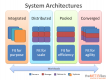
This course will cover trade-offs, currently common patterns and solutions for managing complex systems and communication within and between them.
Changes in the integration between services or systems will trigger changes in the design of the system. This course covers how to design maintainable, fit to the size and purpose of your organisation service and systems architecture and practical infrastructure.
This course covers common problems with building the landscape of distributed apps, starting from integration problem, infrastructure and modern approaches, to solving complexity issues.
This course explains the pros and cons of each solution (e.g. traditional SOA vs Microservice architecture), available tools (mostly open-source) supporting the development and maintenance, etc..
Course Format
It is mostly discussion (with limited presentations).
The course:
- Includes lectures and hands-on practice in using MagicDraw for systems modeling using SysML;
- Explains major SysML concepts and diagrams;
- Provides hands-on experience building system model examples;
- Shows how to trace model elements in different views;
- Explains how to use MagicDraw features efficiently;
- Is based on a consistent modeling case study.
Audience:
- System architects, system engineers, software architects and other stakeholders who will create and use models.
Methods:
- Presentations, discussions, and case study-based practical assignments.
Course Materials:
- Slides, case study model, and practical assignment descriptions.
Certificates:
- Each participant receives NobleProg certificate indicating that he/she attended the training.
Audience:
Project managers, architects, system engineers, having to model complex systems including both software and hardware
Teaching Method:
- Theoretical presentation with examples
- Case Study on paper (demo of a SysML tool by the trainer)
By the end of this training, participants will be able to:
- Understand and apply SysML to Systems Engineering projects, using a Model Based Systems Engineering (MBSE) approach.
- Identify system requirements based on use case models.
- Design and analyze system architecture.
Helping Analysts and Designers of the System Engineering domain to understand how to efficiently gather requirements then go through the embedded software design implementation on the basis of system specifications using UML 2 and SysML.
This 3 days training aims at assisting system analysts to express efficiently their needs and designers to make the appropriate architectural design of the system on the basis of these needs.
The resulting system architecture provides a good level of agility to the embedded system software in face of changes as it allows a coherent traceability of the business rules encapsulated in system functions and those of the usage choices (use cases) of the end-users toward the software implementation level.
At the end of the course the student should be able to:
Knowledge and Understanding.
- Understand the principles and business advantage of systems developed around services.
- Become fully aware of the major protocols and technologies involved in the web services standard, and understand how these technologies fit together. Your knowledge will extend to leading-edge and emerging aspects of web services as well as the more established elements of the standard.
- Understand in depth the technology used to enable systems based on a widely used programming language to both use and provide Web Services.
Intellectual Skills:
- Identify where the service oriented approach and in particular web services are appropriate for particular business scenarios.
- Consider the most effective design for a web services solution
- Acquire, in the future, knowledge and understanding of emerging aspects of the rapidly evolving web services standard
Practical Skills:
- Operate with current technologies associated with Web Services that are platform neutral – XML, SOAP, WSDL
- Write and expose web services in a widely used programming language and write client code in that language to invoke web services.
This two days course allows participants to acquire a common terminology of the System Engineering, familiarize themselves with the system vision, principles and state-of-the-art procedures according to ISO / IEC 15288 and ISO / IEC / IEEE 42010 standards as well as architectural frameworks of System Engineering such as (DoDAF, MoDAF and NAF...) and how to align their viewpoints using the Enterprise Architecture Frameworks Methodologies such as the Open Group's TOGAF's ADM (Architecture Development Method).
During the course the delegates will do simple exercises, answer questions, etc...
Sparx Enterprise Architect is usually used during the course, but any other tools can be used instead.
This examination (as well as the others in the OCSMP series) tests your ability to apply the knowledge and skills listed here in the context of a model of a system. As you study, go beyond each individual diagram to understand how aspects that it models can influence or affect aspects of the system represented in other diagram types.
Understanding concepts of the UAF 1.1 in the context of the NATO NAF v4 Architecture Framework is very beneficial as the Domain Meta-model (DMM) of UAF describes various stakeholder concerns associated with a system, such as security, information or measurements through a set of predefined viewpoints and then mapped to the corresponding views in NAFv4.
On the other hand, the Architecture Stages of the NATO NAFv4 Methodology helps to understand how to make use efficiently of the views of the UAF to ensure coherence and completeness while enabling traceability from high-level goals until personal and physical resources that need be deployed to realize them.
Concepts and techniques explained during the course are progressively applied by the attendees using an end-to-end case study and different exercises on it.
Format of the Course
- Interactive lecture and discussion.
- Lots of exercises and practice.
- Hands-on implementation in a live-lab environment.
Course Customization Options
- To request a customized training for this course, please contact us to arrange.
During the course the delegates will do simple exercises, answer questions, etc...
Sparx Enterprise Architect is usually used during the course, but any other tools can be used instead.
First module enables students to gain an overview of the use of MODAF to support acquisition.
Secong module provides an in-depth description of the MODAF views and how they are used in the development of an architecture. It describes how the 6-step process is applied and how information gathered from stakeholders is interpreted within the MODAF model and represented in user-focussed views.
The audience:
- Enterprise Architects, the principal customers for MODAF views, who need to both correctly interpret standard MODAF views provided to them and to specify and control the tasks required to create new views
- Architectural modellers who need guidance on the creation and interchange of MODAF views (including for example: architecting principles, view coherence rules and tool selection criteria)
- Tool developers and engineers who are implementing architectural data repositories for storing and manipulating MODAF Architecture data elements
- Trainers and educators who require reference material in order to appropriately train and support the previous types of MODAF users
- MODAF users who wish to contribute to the development of MODAF
- Managers who need to understand what views are required to answer their particular questions
Participants are given a chance to put their knowledge into practice as they step through the creation and deployment of a set of proof-of-concept microservices built with Spring Cloud, Spring Boot and Docker.
Finally, the relevant infrastructure building blocks are examined to help participants determine the most suitable tools and approaches to use for different organizational requirements.
By the end of this training, participants will have a solid understanding of Service-Oriented Architecture (SOA) and Microservice Architecture as well practical experience using Spring Cloud and related Spring technologies for rapidly developing their own cloud-scale, cloud-ready microservices.
Audience: Project managers, architects, system engineers, wishing to discover the ARCADIA method and the Capella tooling
Teaching Method:
- Theoretical presentation with examples
- Capella tool demonstrations
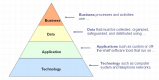
This training course aims at helping attendees to understand the most used Enterprise Architectures and rules to follow up in their construction to succeed with an appropriate architecture scenario for their organisation.
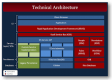
Thanks to the selection of appropriate architecture layers, components and traceability links that are to be established from the business layer to the technical layer, the resulting enterprise architecture framework allows you a good impact analysis in the face of evolutions of the business decisions and anticipates mutations of the corresponding information system components.


.png)


.jpg)


_ireland.gif)
.jpg)


.jpg)